DCA Out vs Price Ladders: How to Sell a Large Crypto Position
How to unwind a large crypto position: time-based selling versus price ladders, which tax lots to sell first, and the rules that keep you on plan when it rips mid-exit.
Marktanalyses, productupdates en tradingstrategieën van het Blockcircle-team.
How to unwind a large crypto position: time-based selling versus price ladders, which tax lots to sell first, and the rules that keep you on plan when it rips mid-exit.

An Omega of 0.073 and a tail ratio of 0.070 fail a strategy faster than any Sharpe will. Both anchor at 1.0, both are legible to a committee, and both need a minimum observation count you have to specify in advance.
Reg-T, portfolio margin, SPAN, and crypto unified accounts each price your risk differently. Netting frees capital, but cross-margin also means one bad position can take the whole book down.

The constraint on a five thousand dollar account is not which questions are interesting, it is which books absorb 250 dollars in and 250 dollars out. On the readings I have, that rules out more categories than it admits.
Past two or three independent inputs, every extra indicator raises your confidence without touching your accuracy. A deadline, a three-input cap, and two-sided triggers fix most of it.

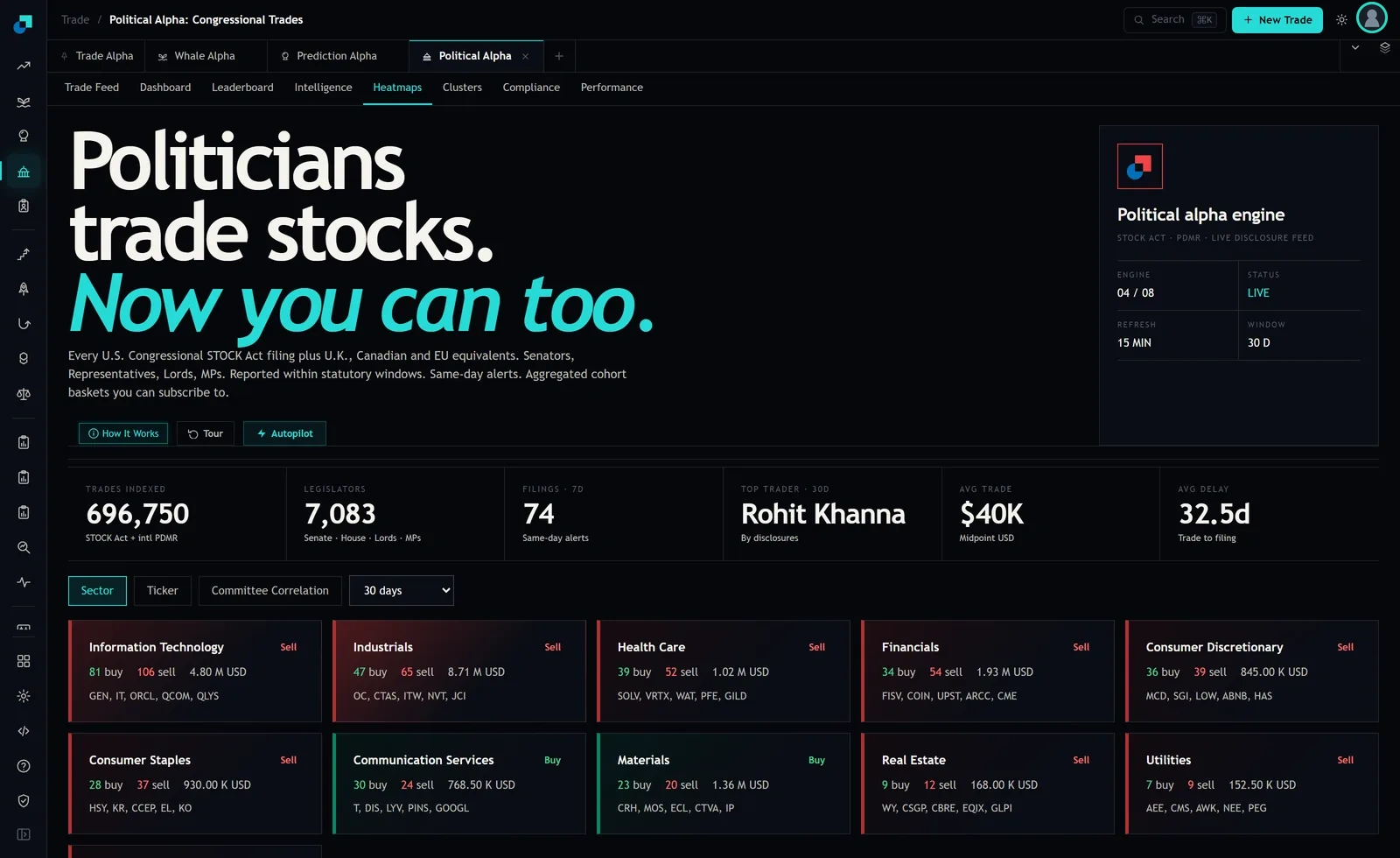
Read the sector heatmap as a forecast of where a copied book lands rather than as a flow report. On one capture two sectors carry 65 percent of notional, and the replication rule decides which one breaches first.
Dollar cost averaging quietly assumes the asset survives. Most altcoins do not, which turns averaging down into a way of buying more of a losing hand.
What the Fed's overnight reverse repo facility is, why money funds parked trillions there, and how to read its daily balance next to the TGA and reserves instead of guessing at liquidity.

Locate availability, recall risk and borrow cost concentrate in exactly the names a momentum signal wants to be short. The realizable short book is a biased subset of the signalled one, and the bias has to be measured.
USDC on one chain and USDC.e on the next look identical in a wallet, but they have different issuers, different backing, and different failure modes. Here is how to check which one you actually hold.
Orders and stops pile up at round numbers like BTC at 100k, and that clustering makes stop-hunts and rejections predictable. Here is how to trade around the crowd instead of with it.