How to Estimate Crypto Beta with a Rolling Regression
A step-by-step walkthrough of regressing a token's excess returns against a benchmark to estimate beta, and why one full-sample number quietly lies to you.
Oct 24, 2026
来自 Blockcircle 团队的市场分析、产品更新和交易策略。
A step-by-step walkthrough of regressing a token's excess returns against a benchmark to estimate beta, and why one full-sample number quietly lies to you.
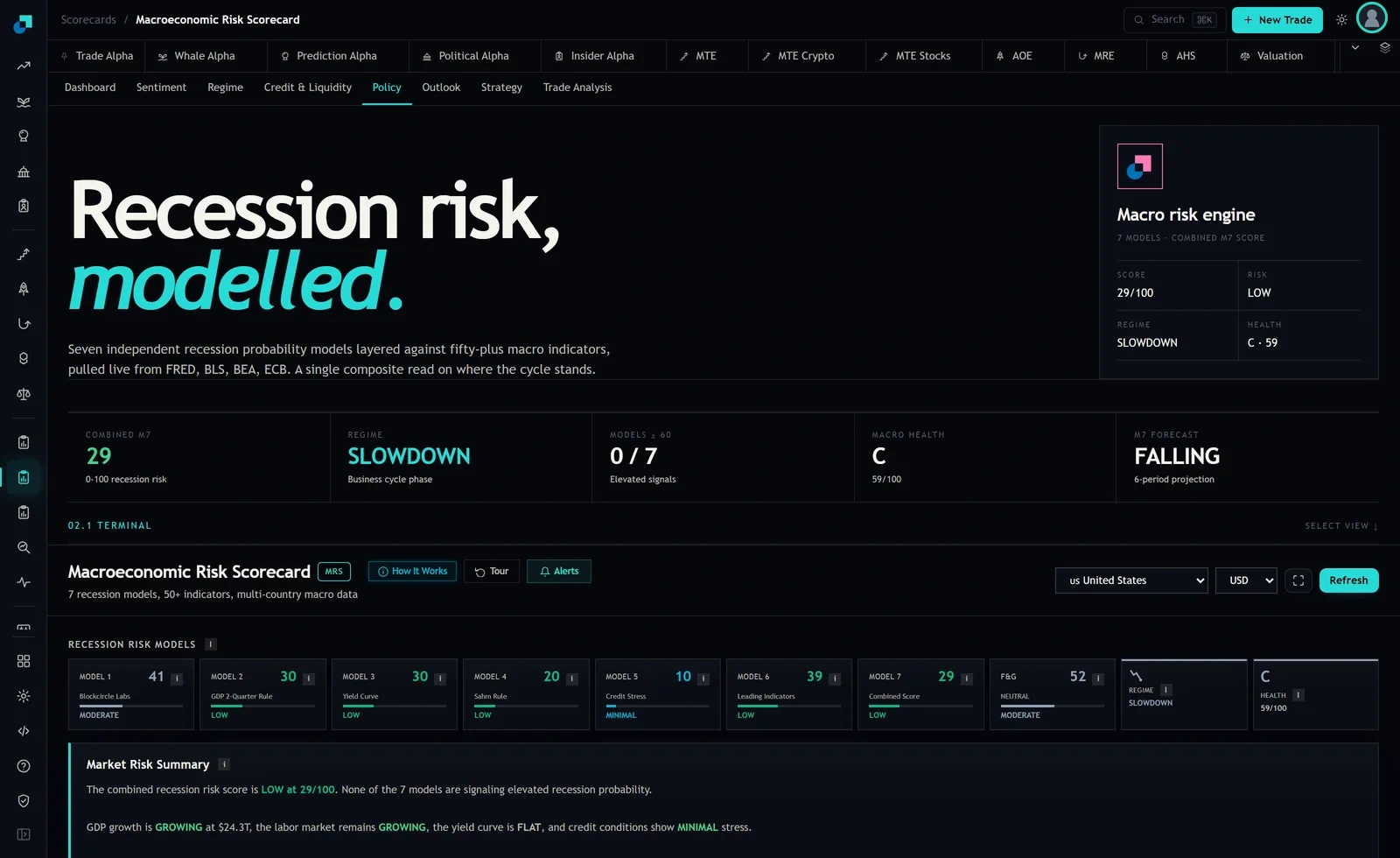
Guidance tells you what a committee says it will weigh. A fitted reaction function tells you what it has actually weighed. Here is the specification, the identification problems, and how to score it against the curve.
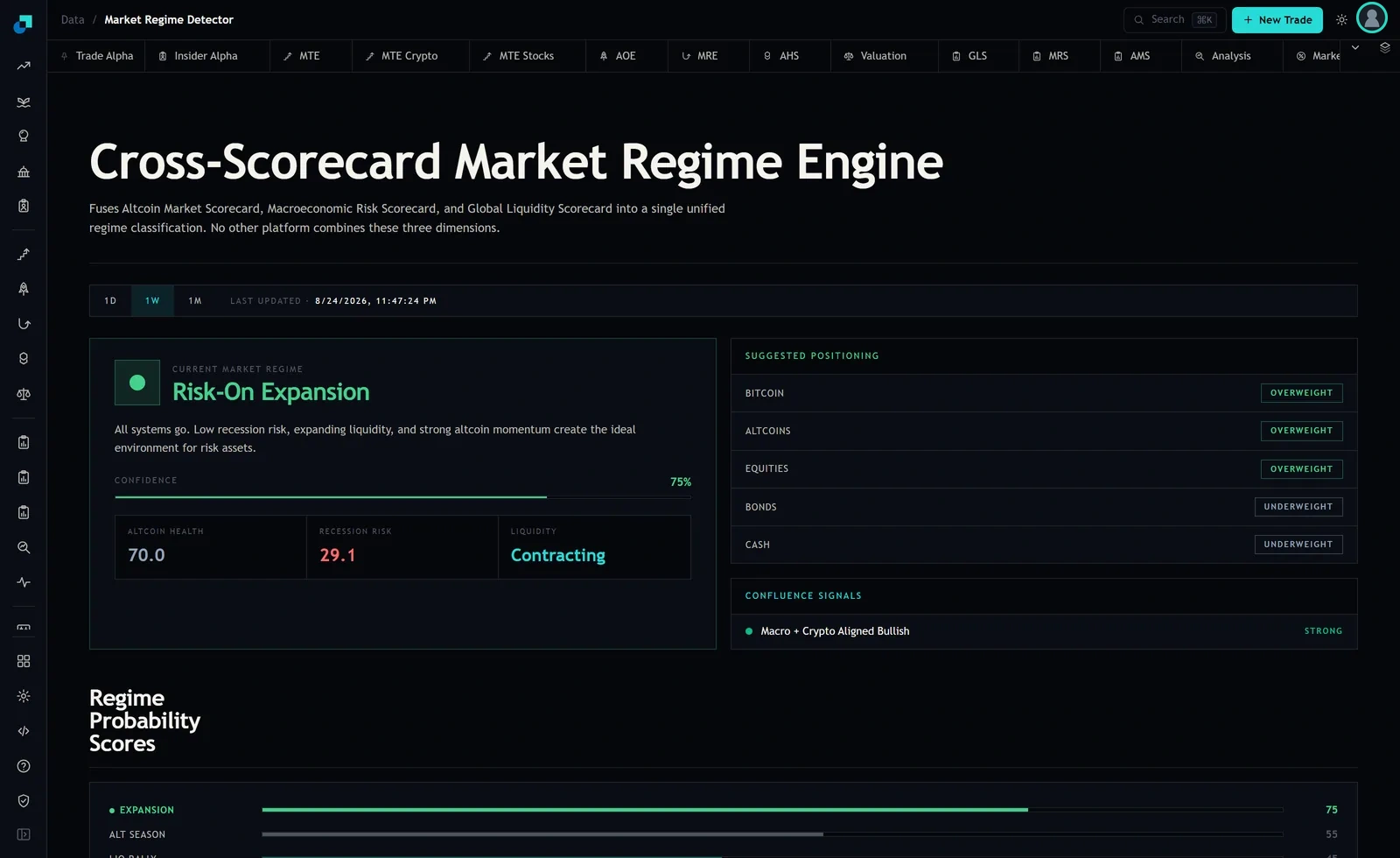
Three overweights and two underweights do not add up on their own. Here is the funding-first arithmetic that turns the positioning row into trade sizes on a 40,000 dollar account.
The regime where debt service starts steering monetary policy. What the transition markers look like, why post-WWII repression is the template, and how to position for it.
CME bitcoin gaps do not always fill, and the ones that fill fast are the ones you remember. Here is how to read fill base rates and trade toward a gap without lying to yourself.
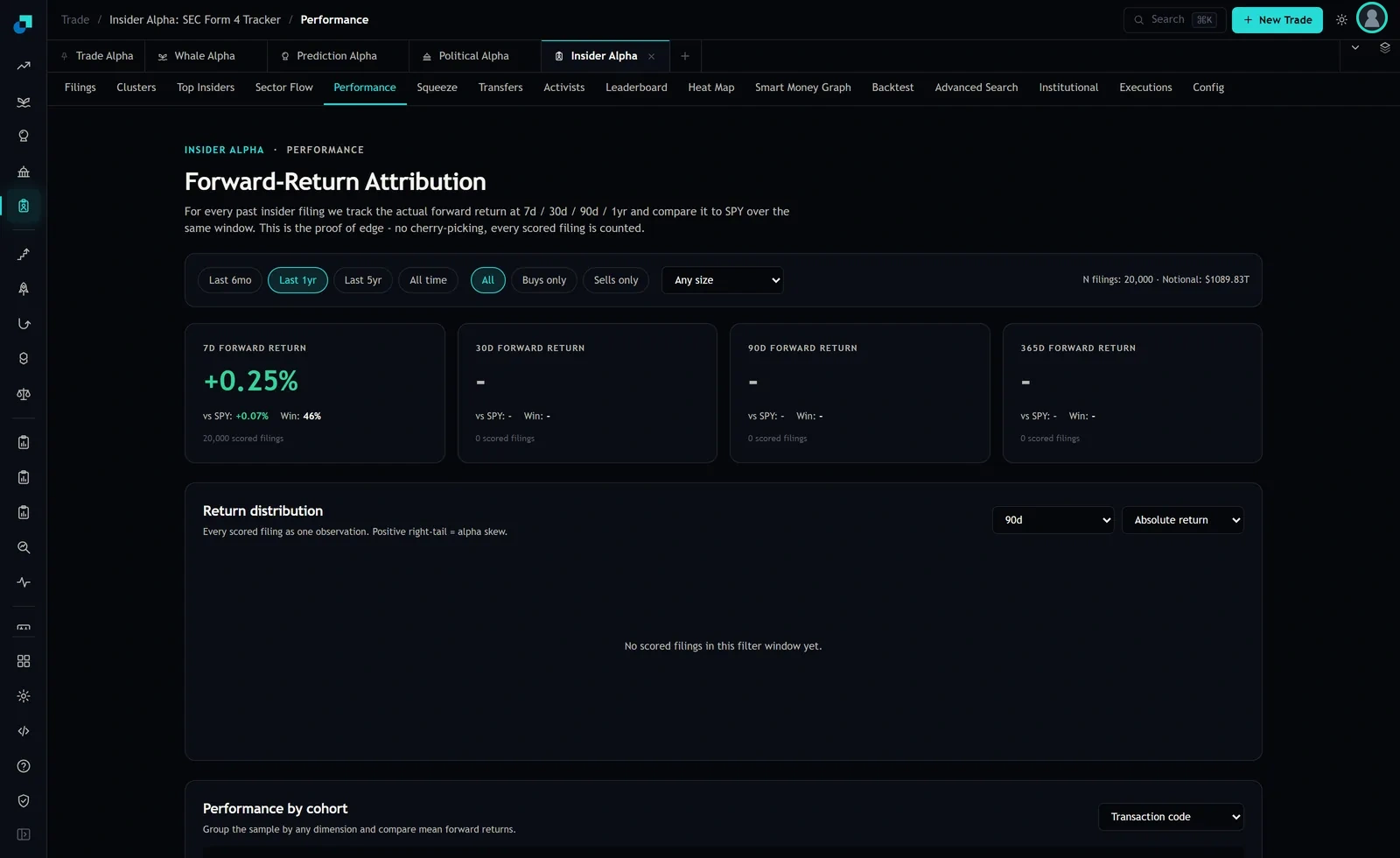
A ninety day paper protocol on insider filings, the eight fields to log every week, and the three go or no go tests to apply on day ninety. Most people fail the first test, which is whether they followed their own rule.
Liquidity beta measures how hard an asset gets pushed around when global liquidity moves. Here is how to estimate it with a simple regression and use it for sizing and rotation.
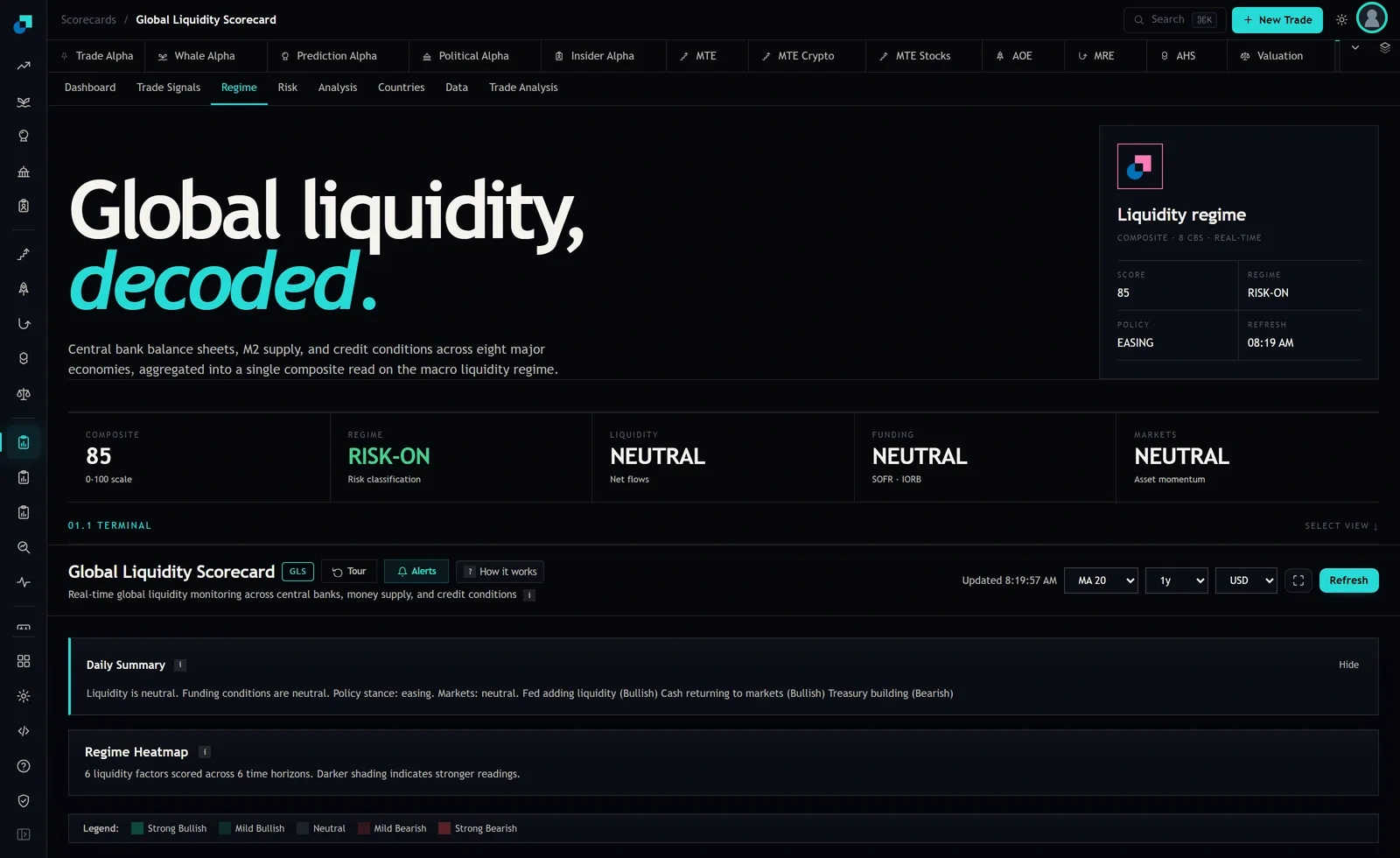
A macro overlay that is not in the policy document is a deviation you will defend after the fact. Here is clause language binding allocation ranges to a named liquidity state, and who may invoke it on what evidence.
How to wire EDGAR, House, and Senate disclosure feeds into low-latency Telegram or Discord alerts without drowning in amendment noise. Polling cadence, dedup rules, and the failure modes that bite.
How I build a working Dune dashboard for tracking whale wallets, from forking a query to writing SQL against decoded transfer tables and charting net position over time.
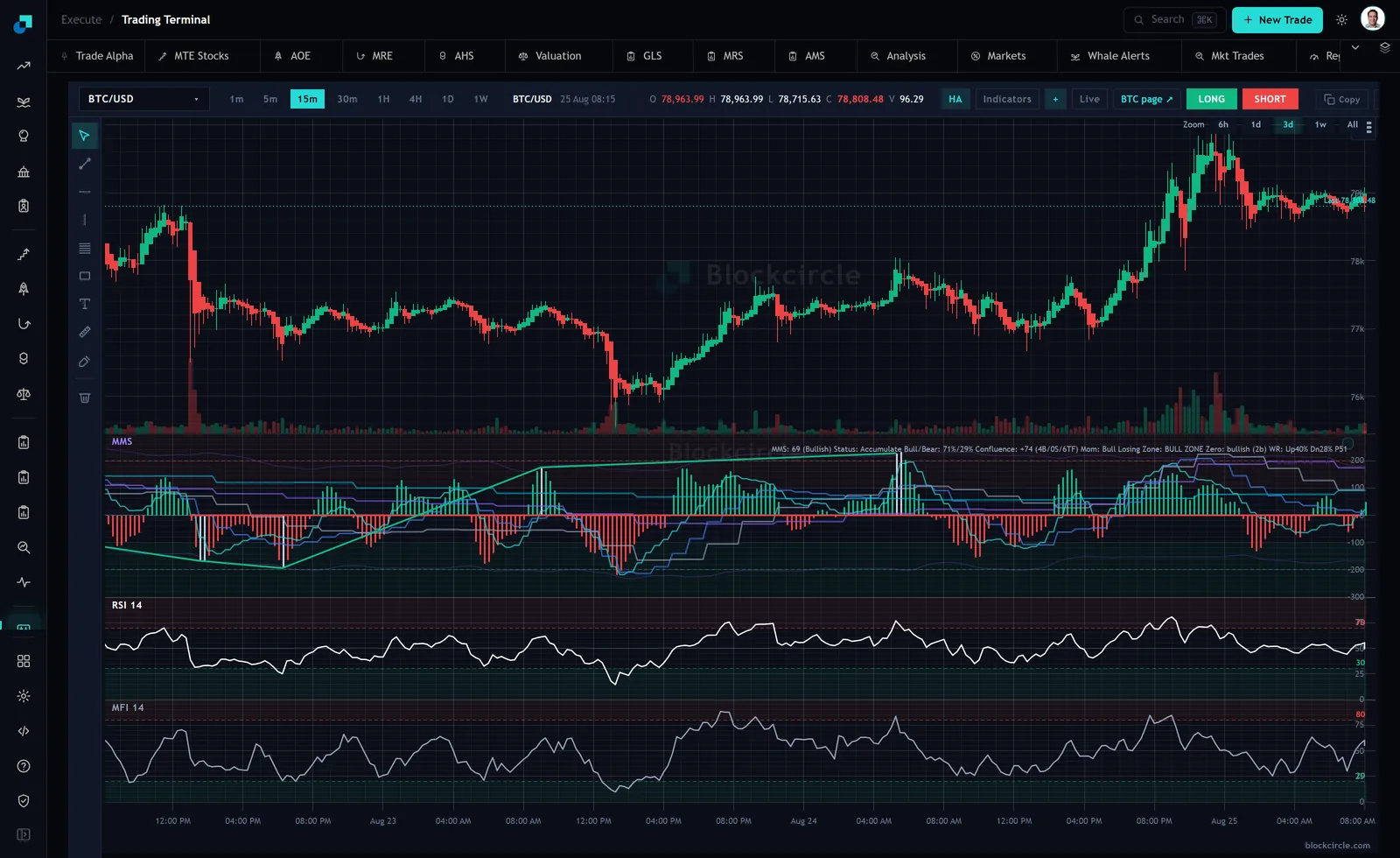
A chart that has stopped updating still shows you a price, and a limit priced off it is either already through the market or nowhere near it. Here is the ten second check to run before every entry.